101 films — 31 hours — from the biogerontologists, physicians and research institutions who study how we age, in their own words and at length. Every video id was checked against YouTube before it shipped and every runtime was fetched rather than estimated. Nothing loads from Google until you press play — the thumbnails are served from this site, and the player only appears when you ask for it.
Essentials
Start here.
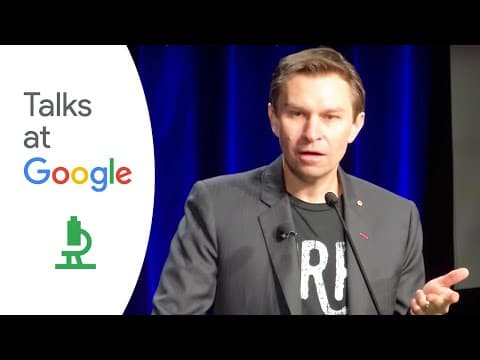 Play55 minTalks at GoogleDavid Sinclair | Why We Age and Why We Don't Have To | Talks at GoogleThe Harvard geneticist lays out his “information theory” of ageing — the idea that we age as cells lose epigenetic information, like scratches accumulating on a record — and the research programme built around it.Why it’s worth itThe clearest single introduction to why one influential lab thinks ageing is a process that can, in principle, be slowed. A strong first watch, and honest about what is hypothesis versus established.
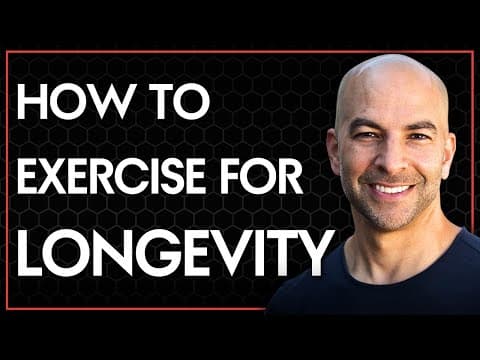 Play1 h 14 mPeter Attia MD206 - Exercising for longevity: strength, stability, zone 2, zone 5, and more | Peter Attia, M.D.A comprehensive walk through the pillars of training for a long healthspan — stability, strength, the aerobic base (zone 2) and peak aerobic capacity (VO₂ max) — and why each matters differently with age.Why it’s worth itIf you watch one thing on exercise and longevity, watch this. It turns “exercise is good” into a specific, defensible framework from the physician who popularised it.
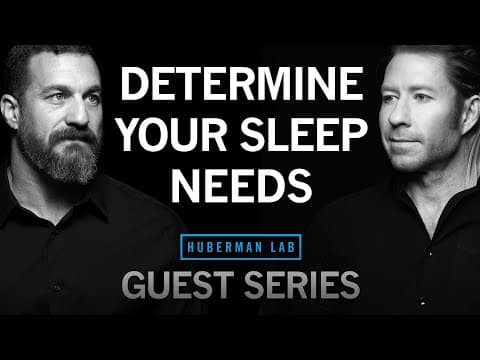 Play3 h 00 mAndrew HubermanDr. Matt Walker: The Biology of Sleep & Your Unique Sleep Needs | Huberman Lab Guest SeriesThe Berkeley sleep scientist explains what sleep actually is — its stages, the biology of NREM and REM, and how much you individually need — in the first of a six-part series with Andrew Huberman.Why it’s worth itThe foundational sleep watch. Three hours, but it replaces a shelf of sleep-hack videos with the real biology, from the person who wrote the book on it.
 PlayThe Royal InstitutionGetting older without getting old - with Andrew SteeleA public lecture on why biological ageing happens and how researchers are trying to treat it as a process rather than a list of separate diseases.Why it’s worth itThe Royal Institution's most-watched ageing lecture, and the clearest hour on how the field frames its own question.
 PlayThe Royal InstitutionIn search of immortality - with Venki RamakrishnanThe Nobel laureate examines what molecular biology currently knows about why organisms age and die, and where the claims made for lifespan extension outrun the evidence.Why it’s worth itA structural biologist's cool reading of a field prone to overstatement, delivered from the Royal Institution stage.
 PlayBuck Institute for Research on AgingMar 4, 2026: The Future of Research on Aging is Now; Eric Verdin, MDThe Buck Institute's president surveys where geroscience stands — the mechanisms under study, the trials running, and the distance still to human outcome data.Why it’s worth itThe single best orientation to the institutional research agenda, from the person who sets it.
 PlayStanfordLongevity and Aging in HumansTwo Stanford ageing biologists give a lecture-hall overview of ageing in humans: what changes with age, and which organisms and mutations have taught the field the most.Why it’s worth itA proper university lecture from two serious laboratories — the register this library is built for.
 PlayBuck Institute for Research on AgingSteve Austad: Why do we age?A comparative biologist asks why ageing exists at all, drawing on species whose lifespans differ by orders of magnitude.Why it’s worth itAustad has spent a career on the evolutionary question most longevity content skips entirely.
 PlayacmedsciThe Science of Ageing | Professor Dame Linda Partridge (full lecture)The Academy of Medical Sciences lecture on the biology of ageing, covering the genetic and dietary manipulations that alter lifespan in laboratory organisms.Why it’s worth itPartridge is among the field's founding figures; this is her full argument rather than a clip of it.
 PlayBioAcc PodcastIs the Longevity Field Overhyped? Charles Brenner—NAD Metabolomics Pioneer and Aging RealistA biochemist who publicly disputes the longevity field's overclaiming explains which findings he thinks are solid, which are exaggerated, and why the distinction matters.Why it’s worth itA library with no critical voice is marketing; Brenner is the most rigorous sceptic the field has.
 PlayThe Dan Buettner PodcastThe 90-Year Limit: Why We Can't Outrun Biology with S. Jay OlshanskyA demographer of ageing argues that human life expectancy is running into biological limits, and examines what the population data do and do not support.Why it’s worth itOlshansky has spent thirty years correcting inflated lifespan forecasts, with the numbers to do it.
 PlayTEDx TalksThe longevity revolution: Turning aging into opportunity | Linda Fried, MD, MPH | TEDxBostonThe dean of Columbia's school of public health on what an ageing population means, and on frailty as a measurable clinical state rather than an inevitability.Why it’s worth itFried defined the frailty phenotype used worldwide; this is the population-level frame the biology sits inside.
 PlayThe Royal InstitutionThe fight against time: can we slow down ageing? - with Carina KernA discussion of ageing as a network of interacting damage processes, and of what it would take to intervene in that network rather than in single pathways.Why it’s worth itA systems view of ageing biology, presented for a general audience without losing the mechanism.
The library
Everything, by subject.
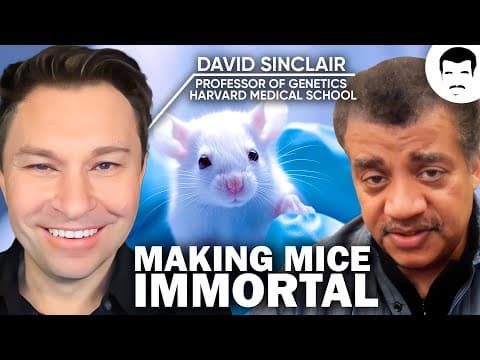 PlayAgeing biology47 minIs Aging a Disease? Epigenetics with David Sinclair & Neil deGrasse TysonStarTalkDavid Sinclair and Neil deGrasse Tyson work through the epigenetics of ageing for a general audience — whether ageing is best thought of as a disease, and what that framing would change.Why it’s worth itThe most beginner-friendly version of Sinclair’s argument; StarTalk’s format keeps it accessible without dropping the science.
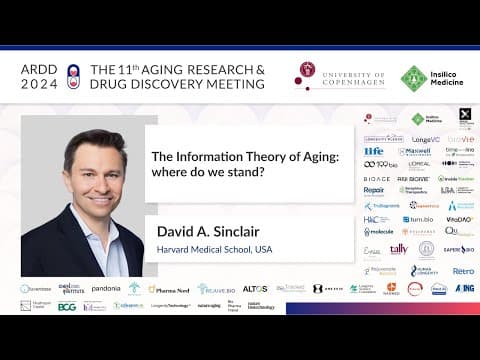 PlayAgeing biology29 minDavid A. Sinclair at ARDD2024: The Information Theory of Aging: where do we stand?ARDDSinclair’s own update, delivered to the Aging Research & Drug Discovery conference, on where the information theory of ageing stands — including what has and has not held up.Why it’s worth itThe advanced counterpart to the accessible talks: a researcher presenting to peers with the caveats intact. Useful for seeing how a bold theory is defended in front of other scientists.
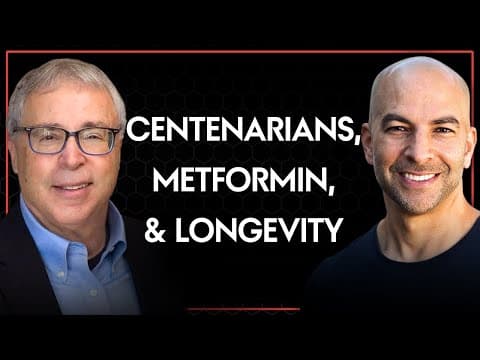 PlayAgeing biology2 h 48 m204 - Centenarians, metformin, and longevity | Nir Barzilai, M.D.Peter Attia MDNir Barzilai on decades studying centenarians — the genetics that protect the longest-lived, why he argues ageing itself is targetable, and the TAME trial designed to test metformin against it.Why it’s worth itThe definitive long-form conversation on the “treat ageing, not just diseases” idea, from the researcher running the trial meant to test it. Nearly three hours, and worth it.
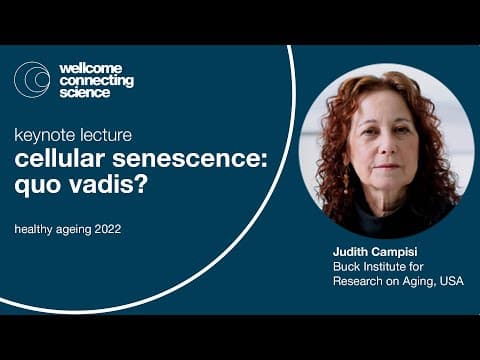 PlayCellular health27 minJudith Campisi | Cellular Senescence: Quo Vadis? | Keynote Lecture |Wellcome Connecting Science Learning and Training A keynote from the late Judith Campisi — a pioneer of the field — on cellular senescence: why cells stop dividing, the inflammatory “SASP” signals they secrete, and where that leaves therapeutic ideas.Why it’s worth itPrimary-source science from the person who defined much of it, delivered at a Wellcome scientific meeting. The clearest authoritative account of senescence you can watch.
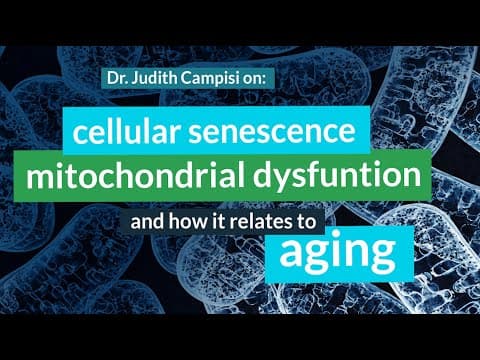 PlayCellular health1 h 02 mJudith Campisi, Ph.D. on Cellular Senescence, Mitochondrial Dysfunction, Cancer & AgingFoundMyFitnessRhonda Patrick’s in-depth interview with Judith Campisi on senescent cells, the SASP, mitochondrial dysfunction, and the double-edged relationship between senescence, cancer and ageing.Why it’s worth itLonger and more conversational than the keynote, with Patrick drawing out the mechanisms. The best pairing of depth and accessibility on cellular ageing.
 PlayExercise & performance9 minMaximize your VO2 max and fitness levels to live longer and healthier | Peter Attia and Mike JoynerPeter Attia MDPeter Attia and Mayo Clinic physiologist Michael Joyner on VO₂ max — what maximal aerobic capacity measures, and why it is among the strongest predictors of how long you live.Why it’s worth itNine minutes to understand the single fitness number most tied to longevity, explained with one of the world’s authorities on human performance.
 PlayExercise & performance19 minSimple metrics for identifying if you're training in Zone 2 | Peter Attia and Iñigo San-MillánPeter Attia MDHow to tell whether you are actually training in “zone 2” — the low-intensity aerobic range — with Iñigo San-Millán, the physiologist who brought it into elite sport.Why it’s worth itTurns a vague training buzzword into something you can measure. The practical companion to the longevity-exercise framework.
 PlayExercise & performance6 minWhy VO2 max is the greatest predictor of lifespan | Peter AttiaPeter Attia MDA short, sharp explainer on why VO₂ max predicts lifespan so strongly, and how large that association actually is across the fitness range.Why it’s worth itSix minutes for the headline of the exercise-and-longevity literature. The quickest way in.
 PlaySleep & recovery2 h 43 mDr. Matt Walker: Protocols to Improve Your Sleep | Huberman Lab Guest SeriesAndrew HubermanThe practical half of the Walker–Huberman series: the evidence behind light, temperature, caffeine, alcohol and timing, and what actually moves sleep quality.Why it’s worth itWhere the biology becomes protocols — detailed and specific, from the researcher rather than a summariser.
 PlaySleep & recovery2 h 28 mDr. Matt Walker: Using Sleep to Improve Learning, Creativity & Memory | Huberman Lab Guest SeriesAndrew HubermanHow sleep consolidates learning and memory — the role of deep slow-wave and REM sleep in locking in what you learned, and what sleep loss costs cognition.Why it’s worth itThe “why sleep matters for the brain” episode. Connects sleep directly to the cognitive side of ageing well.
 PlayInterventions under study7 minThe discovery & first uses of rapamycin | Peter Attia, David Sabatini, & Matt KaeberleinPeter Attia MDThe origin story of rapamycin — found on Easter Island, later shown to inhibit the mTOR growth pathway — told with David Sabatini, who mapped mTOR, and Matt Kaeberlein, who studies it in ageing.Why it’s worth itA rare short segment with two of the people who built this field. The cleanest introduction to the most-studied longevity drug candidate — mechanism, not hype.
 PlayInterventions under study2 h 29 mMatt Kaeberlein on Rapamycin Longevity Series | Lessons learned from 2 decades of Rapamycin researchRapamycin Longevity LabMatt Kaeberlein’s own summary of two decades of rapamycin research — what the animal evidence shows, what is known about dose and risk, and how far the mechanism runs ahead of human outcome data.Why it’s worth itThe most complete, most sober account of rapamycin and ageing, from a lead researcher careful to separate what is established from what is hoped.
 PlayInterventions under study14 minHow Sauna Use Can Impact Brain Health and Longevity | Rhonda Patrick, Ph.D.Peter Attia MDRhonda Patrick on deliberate heat exposure — how regular sauna use associates with cardiovascular and brain-health outcomes, and the hormesis idea of a mild stress that triggers adaptation.Why it’s worth itA tight, evidence-anchored take on one of the more accessible longevity tools, careful about what is association versus cause.
 PlayInterventions under study45 minSauna Use as an Exercise Mimetic for Heart and HealthspanFoundMyFitnessA fuller treatment of sauna as an “exercise mimetic” — the cardiovascular adaptations heat stress shares with exercise, and where the observational evidence is strongest and weakest.Why it’s worth itThe deeper dive for anyone who wants the mechanisms and the caveats behind the sauna headlines.
 PlayFasting & caloric restriction1 h 51 mFasting & Nutrition Protocols for Longevity & Disease Prevention w/ Valter Longo | Rich Roll PodcastRich RollValter Longo — who defined the fasting-mimicking diet — on fasting, protein and the eating patterns his lab studies for healthspan and disease, at length with Rich Roll.Why it’s worth itThe primary source on fasting-mimicking, in his own words rather than second-hand. Longo is unusually precise about what the research does and does not show.
 PlayFasting & caloric restriction1 h 16 mFasting Mimicking Diet, longevity and age-related diseases | Valter Longo, PhD | The Metabolic LinkMetabolic Health SummitLongo’s conference talk on the fasting-mimicking diet and age-related disease — the mechanisms of periodic fasting, and the trials his group has run.Why it’s worth itThe academic-audience version: more mechanism, fewer questions, delivered to a scientific meeting.
 PlayFasting & caloric restriction1 h 35 mProtein, Fasting, Cancer, and Longevity - with Valter Longo, PhD | The Proof Podcast EP 237The Proof with Simon HillLongo on genuinely contested territory — protein intake, fasting, cancer and longevity — where the muscle literature and the longevity literature pull in different directions.Why it’s worth itA rigorous host pressing a leading researcher on the real disagreements. Pairs well with the protein debates in the nutrition library.
 PlayBiomarkers & measuring3 h 56 mDr. Peter Attia on Mastering Longevity – Insights on Cancer Prevention, Heart Disease, and AgingFoundMyFitnessA near-four-hour masterclass with Peter Attia across his whole framework — cardiovascular disease and apoB, cancer screening, metabolic health, and how he thinks about risk and prevention.Why it’s worth itThe most complete single conversation on measuring and managing the drivers of healthspan. Long, but effectively a course.
 PlayBiomarkers & measuring2 h 34 mThe $2M Longevity Protocol: Bryan Johnson’s Biohacking Blueprint | Rich Roll PodcastRich RollBryan Johnson walks through “Blueprint” — a measurement-obsessed protocol tracking biological age across dozens of markers — and the philosophy of trying to quantify ageing in one body.Why it’s worth itA concrete look at what an all-in, data-driven longevity experiment looks like — one person’s protocol, not a prescription. Included for the measurement mindset, held at arm’s length from the hype.
 PlayAgeing biologyThe Science Of Ageing with Professor Dame Linda Partridge The Science and Cocktails FoundationPartridge walks through the experimental genetics of ageing — the single-gene and dietary manipulations that extend life in flies, worms and mice, and what transfers to humans.Why it’s worth itAn unusually relaxed long-form talk from a scientist who normally speaks in seminar rooms.
 PlayAgeing biologyCynthia Kenyon (UCSF) Part 1: Genes that Control AgingScience Communication LabThe discovery that mutating a single gene doubles the lifespan of C. elegans, told by the biologist who made it, with the insulin/IGF-1 signalling that followed.Why it’s worth itThe foundational experiment of modern ageing genetics, narrated first-hand for a scientific audience.
 PlayAgeing biology"Tackling the Complexity of Ageing with Systems Approaches" by João Pedro de MagalhãesMichael Levin's Academic ContentA systems-biology treatment of ageing: comparative genomics across species, large data resources, and the computational search for mechanisms.Why it’s worth itDe Magalhães built the databases much of the field now runs on; this is his method laid out in full.
 PlayAgeing biologyEvolutionary aspects of ageing | Steven Austad | Reason with Science | Lifespan | Human healthReason with ScienceA long conversation on the evolutionary theory of ageing — why natural selection tolerates senescence, and what long-lived species reveal about it.Why it’s worth itDepth on the 'why' rather than the 'how', from one of comparative biogerontology's leading figures.
 PlayAgeing biologyBrian Kennedy at ARDD2024: Where are we in the Longevity QuestARDDA conference keynote assessing where longevity research actually stands: which interventions have replicated, which have not, and what human trials would need to show.Why it’s worth itA candid stock-take from the ARDD stage, including the negative results most talks omit.
 PlayAgeing biologyWhy we die | The Royal SocietyThe Royal SocietyThe Royal Society lecture behind 'Why We Die' — the molecular biology of death, and a Nobel laureate's assessment of immortality claims.Why it’s worth itRamakrishnan weighs the science and the hype in the same hour, which almost no one else does.
 PlayAgeing biologyAGE Presents: Laura Niedernhofer - Genome Instability and Aging.American Aging AssociationGenome instability as a driver of ageing: DNA damage, repair capacity, and the progeroid syndromes that made the link visible.Why it’s worth itA specialist seminar on one hallmark of ageing, at the depth a research audience expects.
 PlayAgeing biologyGeroscience and Healthy Longevity with Anthony MolinaUniversity of California Television (UCTV)An introduction to geroscience — the proposition that targeting ageing biology could delay several age-related diseases at once — and the clinical work testing it.Why it’s worth itA clean explanation of the field's central hypothesis and of how far the human evidence has come.
 PlayAgeing biologyRonald Kohanski | GeroscienceLifespan Research InstituteA National Institute on Aging division director describes how geroscience is defined, funded and prioritised at the US national level.Why it’s worth itThe funder's view of the field: what NIA considers established, and what it is still buying evidence for.
 PlayAgeing biologyAging of the Immune System - Dr. Janko Nikolich-ZugichSENS Research FoundationImmunosenescence explained: how the T-cell repertoire, thymic output and inflammatory tone change with age, and what that costs in infection and vaccination.Why it’s worth itImmune ageing is under-covered relative to its importance; this is the field's standard account of it.
 PlayCellular healthSenescent Cells, Cancer, and Aging - Dr. Judith CampisiSENS Research FoundationCampisi on cellular senescence — why cells stop dividing, the inflammatory secretome they adopt, and its double role in suppressing cancer and driving age-related decline.Why it’s worth itFrom the biologist who defined the senescence-associated secretory phenotype; the origin of the senolytics idea.
 PlayCellular healthCellular Senescence and Mitochondria | Prof Joao PassosNUS MedicineThe link between mitochondrial dysfunction and cellular senescence, and how damaged mitochondria sustain the senescent state.Why it’s worth itPassos's laboratory produced much of this evidence; this is the mechanism at seminar depth.
 PlayCellular healthAna Maria Cuervo | Targeting Selective Autophagy in Aging and Age-related DiseasesForesight InstituteSelective autophagy and chaperone-mediated autophagy: how cells clear damaged proteins, and how that clearance declines with age.Why it’s worth itCuervo discovered chaperone-mediated autophagy; the animal work here is not yet matched by human outcome data, and she says so.
 PlayCellular healthAGE Presents: Malene Hansen - Proteostasis and AgingAmerican Aging AssociationProteostasis in ageing — the balance of protein synthesis, folding and degradation, and the autophagy genes that alter lifespan in model organisms.Why it’s worth itA research seminar on the least-explained hallmark of ageing, from a Buck Institute principal investigator.
 PlayCellular healthGerald S. Shadel Talk title: The “Age” of MitochondriaSalk InstituteMitochondria beyond energy production: mitochondrial DNA stress, innate immune signalling and their role in ageing tissue.Why it’s worth itA Salk Institute talk that replaces the tired 'mitochondria are the powerhouse' framing with current biology.
 PlayCellular healthMitochondrial Inflammation in Ageing | Professor Thomas LangerNUS MedicineHow mitochondrial quality control fails with age and how that failure feeds inflammatory signalling.Why it’s worth itLanger's group works at the front of mitochondrial proteostasis; this is the mechanism, not the supplement pitch.
 PlayCellular healthNick Lane (2024) Thoughts on ageing mitochondriaThe Guy FoundationAn evolutionary biochemist's argument about what actually goes wrong in ageing mitochondria, and why the free-radical story was too simple.Why it’s worth itLane thinks against the consensus in public and shows his reasoning — rare and useful.
 PlayCellular healthEnhancing Telomere Maintenance Extends Healthspan - María Blasco at Longevity Summit Dublin 2024Longevity Summit DublinTelomere shortening and telomerase in ageing tissue, and the mouse experiments testing whether telomere maintenance alters healthspan.Why it’s worth itBlasco leads the CNIO; the striking results discussed here are murine, and the human evidence is not yet there.
 PlayCellular healthUnderstanding and Controlling in Vivo Reprogramming for Rejuvenation | Dr Manuel SerranoNUS MedicinePartial epigenetic reprogramming: what happens when Yamanaka factors are expressed briefly in adult tissue, and the tumour risk that constrains it.Why it’s worth itOne of the field's most-discussed directions, presented with its unresolved safety problem in plain view.
 PlayCellular healthHow Stem Cells Contribute to Aging and Age-Related Diseases with Rob SignerUniversity of California Television (UCTV)How stem cell populations change with age, why their regenerative capacity falls, and what that means for tissue maintenance.Why it’s worth itA widely watched university lecture that makes stem cell exhaustion legible without overselling the therapeutics.
 PlayExercise & performanceBente Klarlund - Exercise as Medicine and the role of myokines: a translational perspectiveDIAS - Danish Institute for Advanced StudySkeletal muscle as an endocrine organ: the myokines released during contraction and the signalling they carry to other tissues.Why it’s worth itKlarlund Pedersen discovered muscle-derived interleukin-6; this is exercise physiology from its source.
 PlayExercise & performanceExercise and epigenetic ageing | Prof Nir EynonNUS MedicineWhat happens to epigenetic ageing markers in people who train, and the methodological difficulty of measuring it well.Why it’s worth itA rare lecture that connects the exercise and biomarker literatures, and is honest about the noise in both.
 PlayExercise & performanceBrendan Egan - Muscling in on Aging2TheIHMCSkeletal muscle ageing: the loss of mass, quality and power with age, and what the resistance-training and protein literature shows.Why it’s worth itAn exercise physiologist's full lecture on sarcopenia, with the trial evidence rather than gym folklore.
 PlayExercise & performanceAging and Exercise: Whole Health with Dr. Kevin MurachInstitute for Integrative & Innovative ResearchMolecular responses of ageing skeletal muscle to exercise, including epigenetic memory and the transcriptional signature of training.Why it’s worth itMurach works at the mechanistic edge of exercise biology; the human translation is still in progress here.
 PlayExercise & performanceExercise as medicine in the treatment of cancer | Kathryn Schmitz | Nobel ConferenceGustavus Adolphus CollegeThe evidence base for exercise in cancer care — what the trials measured, and how exercise oncology guidelines were built from them.Why it’s worth itA Nobel Conference lecture from the researcher who chaired the ACSM exercise-and-cancer roundtable.
 PlayExercise & performanceResistance Training | Scientific Evolution of our Understanding - Lecture by Dr. W.J. KraemerACSMHow the scientific understanding of resistance training developed, from early studies to current models of the adaptive response.Why it’s worth itKraemer wrote much of that literature; this is the field's own history told by an author of it.
 PlayExercise & performanceProtein and Amino Acid Supplements and Sarcopenia in Aging: An UpdateDPCPSIAn NIH seminar reviewing protein and amino acid supplementation trials in older adults, and what they do and do not show for sarcopenia.Why it’s worth itPhillips is the most-cited voice on protein and muscle, and here he is presenting to a regulatory-science audience.
 PlayExercise & performanceFit for Your Life: Exercise Comes of Age | President’s LectureACSMDecades of clinical trials of progressive resistance training in frail and very old adults, and what functional outcomes they measured.Why it’s worth itFiatarone Singh ran the trials that put strength training into geriatric medicine; this is the ACSM President's Lecture.
 PlayExercise & performanceExercise and Cognition - Research on AgingUniversity of California Television (UCTV)The relationship between physical activity, cognitive engagement and cognition in later life, and how the observational and trial evidence differ.Why it’s worth itA university lecture that separates association from causation in a literature where the two are usually blurred.
 PlaySleep & recoveryWhy We Sleep: Science of Sleep & Dreams | Matthew Walker | Talks at GoogleTalks at GoogleThe neuroscience of sleep and dreaming: sleep architecture, memory consolidation, and what happens physiologically when sleep is curtailed.Why it’s worth itThe most substantial long-form talk from Berkeley's sleep laboratory, outside the podcast circuit.
 PlaySleep & recoveryThe glymphatic system // Maiken NedergaardThe Physiological SocietyThe glymphatic system — the fluid clearance pathway Nedergaard's group identified, and its dependence on sleep state.Why it’s worth itThe discoverer presenting to a physiological society, including the parts of the model still contested.
 PlaySleep & recoveryLight, Sleep and Circadian Rhythms: Biology to MedicineOxford Martin SchoolHow light sets the circadian clock, the retinal photoreceptors involved, and the clinical consequences of circadian disruption.Why it’s worth itFoster co-discovered the melanopsin photoreceptors; this Oxford lecture runs from molecule to clinic.
 PlaySleep & recoveryGenes that Regulate Sleep and Circadian Rhythms – Lecture by Nobel Laureate Michael YoungNobel PrizeThe Nobel lecture on the genes that build the circadian clock, from the period mutants in flies to the molecular feedback loop.Why it’s worth itThe primary account of a Nobel-winning discovery, given by the laureate.
 PlaySleep & recoverySleep and Healthy Aging | Michael Grandner, PhDUniversity of Arizona Health SciencesHow sleep architecture, duration and disorders change with age, and what the epidemiology links to health outcomes in older adults.Why it’s worth itA sleep-medicine researcher addressing ageing directly rather than sleep in the general population.
 PlaySleep & recoveryThe Sleep-Deprived Human Brain | Nora Volkow || Radcliffe InstituteHarvard UniversityBrain imaging of the sleep-deprived human: what changes in dopamine signalling, attention and reward processing after sleep loss.Why it’s worth itThe director of NIDA presenting her own imaging data at Harvard — mechanism, not lifestyle advice.
 PlaySleep & recoveryCircadian Rhythm in Health and Disease ( Satchin Panda)IAFNSCircadian control of metabolism, the timing of feeding in animal models, and the human studies now testing whether meal timing matters.Why it’s worth itPanda's animal data are strong and his human data are early; this talk keeps the two apart.
 PlaySleep & recoveryASPENBRAINLAB 2018 - Dr. Charles Czeisler: "The Sleep Deprived Brain’s Influence on Aging"Aspen Brain InstituteWhat chronic sleep restriction does to physiology, and the evidence linking sleep loss to age-related disease risk.Why it’s worth itCzeisler founded modern circadian medicine; a compact, high-density summary of his field.
 PlaySleep & recoveryThe Science of Circadian Sleep Disorders with Dr. Phyllis C. ZeeAtriaCircadian rhythm sleep-wake disorders: how they are diagnosed, how they shift with age, and what the clinical literature supports.Why it’s worth itClinical sleep medicine from Northwestern's centre director, on a topic usually left to consumer wearables.
 PlaySleep & recoverySleep and Aging - Research on AgingUniversity of California Television (UCTV)Why sleep is regulated as it is, how it changes across the lifespan, and the sleep disorders that become more common with age.Why it’s worth itThe most-watched academic lecture on sleep and ageing, from a UC San Diego sleep physician.
 PlayInterventions under studyEric Verdin at ARDD2025: Targeting CD38 against agingARDDCD38, NAD decline and immune ageing: the enzyme Verdin's laboratory implicates in falling NAD levels, and the preclinical work testing its inhibition.Why it’s worth itDirectly on the NAD question, from a laboratory generating the data; the work here is preclinical.
 PlayInterventions under studyMetformin as an Anti-Aging Drug with Dr. Nir BarzilaiAtriaThe rationale for testing metformin as a geroprotector, the observational data behind it, and the design of the TAME trial.Why it’s worth itBarzilai conceived TAME; this is the case for it and the regulatory obstacle it was built to address.
 PlayInterventions under studyCan a Drug Slow Aging? The Rapamycin StoryUAZPharmacyThe history of rapamycin and mTOR in ageing research, the lifespan results in laboratory species, and what remains unknown in humans.Why it’s worth itAn academic lecture that spends as much time on the open questions as on the positive findings.
 PlayInterventions under studyTranslational Geroscience: Can rapamycin extend healthy longevity in humans? -Adam R. Konopka, PhDInstitute on Aging UW-MadisonA translational geroscientist reviews what human rapamycin studies have measured so far and how such trials are designed.Why it’s worth itThe clinical counterpart to the animal literature — small, early, and presented as such.
 PlayInterventions under studyClinical Trials & Senolytics | Dr. James Kirkland, Mayo ClinicForesight InstituteSenolytics in the clinic: how senescent-cell-clearing compounds moved into first-in-human trials, and what those trials were powered to detect.Why it’s worth itKirkland's group published the first senolytics paper; here he discusses the trial evidence, which is early-stage.
 PlayInterventions under studyJoseph Baur - NAD+ precursors in pre-clinical and clinical studies - Timepie LectureTimePieNAD precursors in preclinical and clinical study: what raises NAD in tissue, and what the human trials have actually reported.Why it’s worth itBaur is a careful reader of his own field, and he separates the mouse results from the human ones.
 PlayInterventions under studyNAD+ as a target to promote healthy ageing | Prof Riekelt HoutkooperNUS MedicineNAD metabolism as a research target in ageing, covering the biochemistry and the mitochondrial consequences of NAD decline.Why it’s worth itA metabolic biochemist's account, useful precisely because it stays at the level of mechanism.
 PlayInterventions under study2016 Roy Walford lecture: NAD, Sirtuins and Aging - Leonard P. Guarente, PhDDavid Geffen School of Medicine at UCLAThe sirtuin story: how NAD-dependent deacetylases were linked to lifespan in yeast and mice, and the controversies along the way.Why it’s worth itGuarente started this line of research; the lecture includes the replication disputes it provoked.
 PlayInterventions under studyUnderstanding metabolism and aging | Charles Brenner | Reason with Science | NAD system | Anti-agingReason with ScienceA long, technical interview on NAD biochemistry in which Brenner disputes several widely repeated claims about NAD decline and supplementation.Why it’s worth itThe counterweight to the NAD talks in this category, from the biochemist who identified nicotinamide riboside as a vitamin precursor.
 PlayInterventions under studyJoão Pedro de Magalhães - Longevity Pharmacology Comes of AgeARDDThe state of longevity pharmacology: which compounds are under investigation, what the model-organism evidence looks like, and the translation gap.Why it’s worth itA conference survey of the whole drug pipeline rather than an advocate's case for one molecule.
 PlayFasting & caloric restrictionA diet to treat ageing (21 Feb 2013)UCL Lunch Hour LecturesDietary restriction in flies: how specific nutrients, rather than calories alone, appear to drive the lifespan effect in model organisms.Why it’s worth itA UCL lecture that dismantles the simple 'eat less, live longer' story using the actual experiments.
 PlayFasting & caloric restrictionCaloric Restriction: A Key to Longevity with Rozalyn AndersonLongevity Summit DublinCaloric restriction in primates and rodents: the metabolic changes observed, and the differences between the two major monkey studies.Why it’s worth itAnderson ran one of those primate studies; the disagreements between them are the most instructive part.
 PlayFasting & caloric restrictionSusan Racette - Calorie Restriction and Biomarkers of Aging: Highlights from the CALERIE™ TrialEvolutionary MedicineFindings from CALERIE, the randomised human trial of sustained calorie restriction, and the biomarkers it tracked.Why it’s worth itHuman trial data on caloric restriction are scarce; this is a principal investigator reporting them.
 PlayFasting & caloric restrictionHNRCA Monday Seminar Mar. 8, 2021: Testing modification of biological aging in the CALERIE TrialHNRCAWhether the CALERIE intervention altered measures of biological ageing, and how those measures were chosen and interpreted.Why it’s worth itA rigorous look at what a two-year randomised restriction trial could and could not detect.
 PlayFasting & caloric restrictionCalen Ryan | CALERIE Trials: Long-term Caloric Restriction on DNA methylation of Biological AgingForesight InstituteDNA methylation analysis of the CALERIE participants, and what epigenetic clocks reported after long-term caloric restriction.Why it’s worth itWhere the fasting and biomarker literatures meet, presented with appropriate caution about effect sizes.
 PlayFasting & caloric restrictionCaloric Restriction and Longevity: From Calorie- to Time-Restricted FeedingFralin Biomedical Research InstituteThe progression of the research question from calorie restriction to meal timing, and the human metabolic studies behind each.Why it’s worth itRavussin led CALERIE; few people can trace this literature with more authority.
 PlayFasting & caloric restrictionValter Longo: Nutrition, Fasting mimicking diets, Regeneration and LongevityMoleCluesTVThe fasting-mimicking diet research programme: the nutrient-sensing pathways involved and the regeneration effects reported in animals.Why it’s worth itLongo's own account at a scientific symposium; the regeneration findings are largely preclinical.
 PlayFasting & caloric restrictionCalorie Restriction, Exercise, And Longevity: Luigi Fontana, MD PhDConquer Aging Or Die Trying! Mike Lustgarten, PhDCaloric restriction and exercise in humans, and what long-term restriction practitioners look like on standard clinical measures.Why it’s worth itFontana has followed human restrictors for decades — data that no animal study can substitute for.
 PlayFasting & caloric restrictionFasting Metabolism in Health and Disease | Professor Stephan HerzigCBMR at the University of CopenhagenThe metabolic biology of fasting: the hormonal and hepatic switches that fasting engages, and how they behave in disease.Why it’s worth itA Copenhagen research lecture on the physiology that fasting claims rest on.
 PlayFasting & caloric restrictionLunch Hour Lecture: Should I fast for my health and wellbeing?UCL Lunch Hour LecturesA critical examination of fasting practices, including how restrictive eating patterns interact with disordered eating and psychological risk.Why it’s worth itThe dissenting lecture this category needs; fasting research is rarely presented alongside its harms.
 PlayBiomarkers & measuringThe epigenetic clock, biological age, and chronic diseasesNIH VideoCastThe NIH lecture on the epigenetic clock: how DNA methylation predicts chronological age, and how age acceleration relates to disease and mortality.Why it’s worth itHorvath presenting his clock to the NIH Director's lecture series — the primary source for the whole field.
 PlayBiomarkers & measuringRobust New Measures of Biological Age - Steve Horvath at Longevity Summit Dublin 2023Longevity Summit DublinNewer generations of biological-age estimators, their improved robustness, and the limitations that remain in interpreting them.Why it’s worth itAn update from the same author several years on, including where the earlier clocks fell short.
 PlayBiomarkers & measuringDeconstructing the Epigenetic Ageing Clock | Dr Morgan LevineNUS MedicineHow epigenetic ageing clocks are constructed, what they are actually trained on, and why that determines what they can measure.Why it’s worth itLevine built PhenoAge; this is the methodological critique from inside the field.
 PlayBiomarkers & measuringUnderlying Features of Epigenetic Aging Clocks | Morgan Levine, Yale UniversityForesight InstituteThe underlying biological features that epigenetic clocks appear to capture, and the open question of what methylation change represents.Why it’s worth itThe deeper 'what is the clock measuring' talk — the question consumer biological-age tests skip.
 PlayBiomarkers & measuringQuantifying ageing, rejuvenation and longevity | Prof Vadim GladyshevNUS MedicineQuantifying ageing and rejuvenation: single-cell clocks, when ageing begins in development, and how interventions are scored in mice.Why it’s worth itGladyshev's laboratory built the first mouse clocks, which is how longevity interventions get tested at all.
 PlayBiomarkers & measuringBiomarker & Aging Clock Development | Vadim Gladyshev, Harvard, Gordan Lauc, GlycanAgeForesight InstituteA working session on how ageing biomarkers are developed and validated, covering methylation clocks and glycan-based measures.Why it’s worth itTwo developers arguing about validation standards — more informative than either presenting alone.
 PlayBiomarkers & measuringDaniel Belsky: Measuring the Pace of AgingBuck Institute for Research on AgingThe pace-of-ageing approach: measuring the rate of biological change over time rather than estimating a single biological age.Why it’s worth itA genuinely different measurement philosophy from the clocks, explained by its architect.
 PlayBiomarkers & measuringAndrea B. Maier at ARDD2024: Healthy Longevity Clinical Research- the NUS ExperienceARDDHow a university clinic runs healthy-longevity research on real patients, including which measures it collects and why.Why it’s worth itMaier is building the clinical infrastructure the biomarker field will need to prove anything.
 PlayBiomarkers & measuringTony Wyss-Coray at ARDD2023: The plasma proteome as sensor of organ physiology and agingARDDPlasma proteomics as a readout of organ-specific ageing, and the finding that organs appear to age at different rates within a person.Why it’s worth itOne of the most important recent additions to biomarker science, from the group that produced it.
 PlayBiomarkers & measuringAndrea Maier at Longevity Symposium Rovinj: Biological Clocks in Healthy Longevity MedicineGlycanAgeHow biological clocks are used, and misused, in longevity medicine, and what a clinician needs before acting on one.Why it’s worth itThe clinical-scepticism counterpart to the clock-development talks in this category.
Titles, channels and runtimes verified 2026-08-04
These are third-party films hosted on YouTube; their contents are the speakers' views, not ours. This is educational reference material about the biology of ageing — not medical advice, and not a claim about any product sold on this site. Where an intervention such as rapamycin, metformin, sauna or fasting is discussed, that is a description of what the research examines, and mechanism and animal evidence run ahead of human outcomes.