Foundations
Peptides & Supplements
Six ideas carry most of the subject. Each is drawn from the review literature and cited beneath it — including the constraints, which are the part usually left out. Read them as a beginner, at the standard level, or in full mechanistic depth.
The path
The course, in 6 topics
Read in order it runs from what a peptide is, through what it does and how a receptor answers it, to how the body takes it apart, how one is manufactured, and where the field has got to. Each topic can be read as a beginner, a graduate or a researcher, and each closes with the PubMed records behind it.
Tools
Look it up, see the mechanism, judge the evidence
Go deeper
9 research fields, named as the catalogue names them
Grouped by the question the research asks rather than by anything a compound is claimed to do. Each card shows how many compound classes sit in that field and how many randomised human trials exist across them — and whether there is anything on the shelf behind it.
6 fields with compounds in the catalogue
3 fields we follow but do not stock
The record
Read the literature, ask what’s unresolved, or see the coverage
The library
Everything, by subject.
The strongest introduction to the class: the Nobel laureates who discovered GLP-1 and its receptor family, the clinicians and journalists explaining it best to a general audience, and the long-form Ways2Well conversations on where peptides sit inside the regulatory picture.
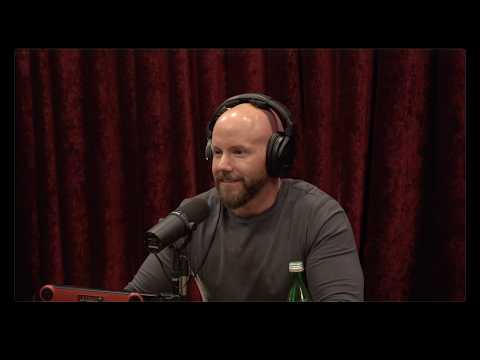 PlayStart Here · 2026Joe Rogan Experience #2469 — Brigham BuhlerBrigham Buhler, founder of Ways2WellThe most recent of the Ways2Well conversations. Covers the healthcare system, the regulatory position around peptides and hormones, and where Buhler argues preventative medicine is heading.
 PlayStart Here · 2025Joe Rogan Experience #2376 — Brigham BuhlerBrigham Buhler, founder of Ways2WellA former pharmaceutical sales insider on how the industry is structured, why certain compounds are hard to access, and the compounding pharmacy landscape.
 PlayStart Here · 2024Joe Rogan Experience #2079 — Brigham BuhlerBrigham Buhler, founder of Ways2WellThe first of the series. Diagnostics, hormone testing, compounded peptides and stem cell therapy, and the regulatory friction around each.
 PlayStart HereFighting Obesity: The GLP-1 RevolutionJoel Habener, Svetlana Mojsov and Lotte Bjerre KnudsenThe Lasker Foundation's citation film traces how a fragment of the proglucagon gene product was identified as glucagon-like peptide-1 and how that laboratory finding was later engineered into a class of medicines.
 PlayStart Here2012 Nobel Lectures in ChemistryRobert Lefkowitz and Brian KobilkaThe two laureates deliver their Nobel lectures on G protein-coupled receptors: how the receptors were first identified biochemically, how they were cloned, and how their activated structure was finally solved.
 PlayStart HereDr. Daniel Drucker Gairdner Science Week Laureate LectureDaniel DruckerDrucker sets out the biology of the proglucagon-derived peptides, the receptors they act on, and how basic endocrinology work over four decades was translated into pharmacology.
 PlayStart HereJens Juul Holst, MD: 2024 UCR SOM Haider Biomedical Breakthrough LectureJens Juul HolstA co-discoverer of GLP-1 gives a full academic lecture on gut hormone physiology, the incretin effect, and how the peptide's very short half-life in the body shaped later drug design.
 PlayStart HereJeffrey Friedman (Rockefeller U./HHMI): The Causes of Obesity and the Discovery of LeptinJeffrey FriedmanFriedman recounts the positional cloning of the ob gene and the identification of leptin, a peptide hormone secreted by fat tissue that signals energy stores to the brain.
 PlayStart HereOzempic Quiets Your Appetite Using Your Brain | NOVA | PBSNOVA (PBS) science unitA public-service explainer on why researchers now think GLP-1 receptor agonists act substantially in the brain rather than mainly in the gut, and what remains unresolved about that mechanism.
 PlayStart HereDiscover the Science and Impact of GLP-1 Weight Loss Drugs | Webinar RecapNational Academies expert panelA convened panel of researchers discusses how GLP-1 receptor agonists work, what the long-term evidence base does and does not yet cover, and the societal questions raised by their rapid uptake.
 PlayStart HereNobel Prize lecture: David Baker, Nobel Prize in Chemistry 2024David BakerBaker's Nobel lecture on computational protein design, including how short designed peptides and miniproteins can be built to bind chosen targets.
 PlayStart HereIn a post-Ozempic world, have we cured obesity? Professor Giles YeoGiles YeoA Cambridge geneticist explains the mechanism of action of GLP-1 receptor agonists and then argues carefully about what these drugs do and do not resolve at a population level.
Scope
What is published, and what is withheld
This section covers the molecules themselves: what a peptide is, how one carries a signal to a receptor, how the body takes it apart, how it is manufactured, and what the published record does and does not establish about each compound class. It matters because it is the layer where claims are easiest to make and hardest to check — and it connects to the rest of the platform as one input among several, alongside what you eat, how you train, and the biology of ageing all of it acts on.
Every citation in this section was retrieved from PubMed by script and links to the record that produced it. Nothing was transcribed by hand, which is what lets the counts be stated at all — and where a compound class has thin human evidence, the library says so rather than rounding it up.
That standard also determines what is missing. This section publishes no dosing information, no administration guidance, no safety or contraindication advice, and no protocol. Those statements carry regulatory weight; we withhold them rather than publish them unreviewed — including where that makes us quieter than a competitor.
These summaries describe what the cited reviews report about peptide chemistry and physiology in general. They are not statements about any compound we sell, and they are not medical advice.
The catalogue
Explore Checkmate Peptides
Precision research peptides under Checkmate by THE HUMAN APEX — the product line that sits beside this science, not inside it.
from Checkmate by THE HUMAN APEX
Explore Checkmate Peptides